



Nonprofit organizations consistently underestimate the executive skill hiding in plain sight. Fundraising gets assigned to a department, managed as a function, and treated as something distinct from leadership. It is not. It is leadership. The CEO who cannot raise money is not fully leading the organization, regardless of what their title says.
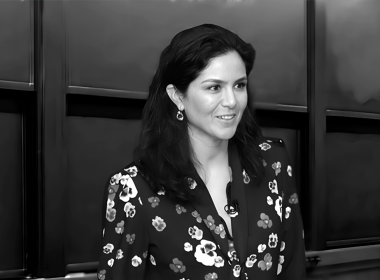
Bettina Alonso, Senior Fundraising Executive with over 20 years of experience raising more than $1 billion across healthcare, faith-based, and global nonprofits, has partnered with ultra-high-net-worth individuals, led high-performing development teams, and worked closely with boards across the sector. “We are not just revenue generators,” Bettina says. “We are architects.”
Fundraising Is Strategic Leadership, Not Revenue Generation
When a CEO raises significant capital, they are doing something far more consequential than securing funds. They are articulating strategy, communicating impact, and aligning stakeholders around a shared future. The ability to inspire investment in a mission is not a side skill – it is proof that the leader can lead.
A CEO who understands fundraising understands donor psychology, timing, positioning, and the long-term cultivation required to build the trust that yields transformational gifts rather than transactional ones. Fundraising touches vision, growth, sustainability, and reputation simultaneously. An executive who treats it as someone else’s responsibility is ceding strategic ground they may not realize they have lost until the consequences surface in board dynamics, donor relationships, or organizational momentum.
Leadership Is a Continuous Ask
The ask is not a single moment. It is a posture that runs through everything a nonprofit CEO does. Asking the board for confidence, the staff for commitment, the community for trust: these are all fundraising disciplines applied to different audiences. Mastering them develops exactly the capabilities that make leadership land: reading a room, listening beneath the surface, aligning interests, and operating with humility alongside confidence when working with highly successful donors.
Bettina illustrates this with a distinction that captures the full range of requirements of fundraising leadership. A million dollars can be raised two ways: one transformational gift from a single individual, or a thousand people each giving a thousand dollars. Both are valid. Both require fundamentally different leadership approaches. “A strong CEO will understand both,” Bettina says. “They can operate at the grassroots level and in the boardroom.” That range is not a development skill. It is an enterprise leadership skill that fundraising develops faster than almost anything else.
Fundraising-Oriented CEOs Build Stronger Boards
Board performance is directly shaped by how engaged members feel in the work that matters most. When board members are brought into development strategy rather than confined to oversight, they become invested ambassadors, people who understand the mission at depth, feel genuine ownership of its growth, and act accordingly. The governance dividend is significant; a board engaged in fundraising strategy is a board that understands what sustainability actually requires, rather than one that reviews reports and asks why revenue is behind target.
Creating that environment requires a CEO who is comfortable leading fundraising conversations at the board level, not delegating them away. When the CEO owns the development relationship with the board, the organization’s culture shifts toward mission sustainability rather than operational maintenance.
Fundraising Is Future-Focused Thinking
At its core, fundraising asks someone to invest in a future that does not yet exist. That requires vision, clarity, and the ability to translate mission into outcomes that a donor can connect to emotionally and intellectually.
A CEO who has mastered fundraising already knows how to think long term, manage risk, steward relationships, and protect institutional credibility. These are not development competencies borrowed for executive use. They are leadership competencies developed through the discipline of asking for significant investments in ambitious, uncertain futures.
If nonprofit organizations are to thrive in increasingly complex environments, executive readiness must be redefined. Fundraising is not a secondary skill that some nonprofit CEOs happen to be good at. It is the discipline that sharpens every other dimension of nonprofit leadership, and the executives who treat it that way build organizations that reflect that clarity in everything they do.
Follow Bettina Alonso on LinkedIn for more insights on nonprofit fundraising, major gifts strategy, and building the development leadership that sustains mission-driven organizations.