


The Global Shift in Education
Aligning seamlessly with the World Happiness Report, it makes sense that some of the happiest countries in the world are resetting their education systems to go back to basics, so to speak, moving away from the digital reliance that has led to declining literacies. These countries are shifting to textbooks, handwriting, limited or no screen time, hands-on activities in and beyond the classroom, consistent wellness and wellbeing exercises, with teachers as facilitators, who are fostering and nourishing the focus on community, trust, connections, culture, and communication models.
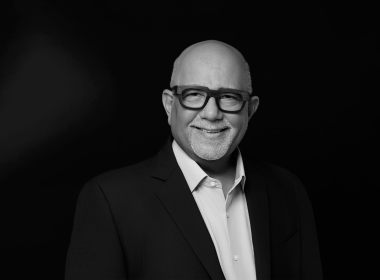
Some may say this seems to be moving backwards, away from technology to the nostalgia of a system that has long since become obsolete. With 26 years of university teaching experience, Dr. Candice Genine Simmons invites us to consider this…what if going back to basics is actually moving forward to basics with a mindset shift to preserve what is good, pure, real, genuine, sincere, and authentic in all that humanity has to offer?
The disclaimer here is that there is a time and a place for social media, generative AI, and a good old-fashioned Google search.
Even so, Dr. Simmons encourages us to embrace beauty in simplicity, wonder in curiosity, perfection in the imperfections, reward after challenges, and humanity in the quiet, little moments that each day brings.
Does AI Need a Time Out?
In Dr. Simmons’ TEDx talk on technology and communication, she posed the question, does technology need a time out? And the answer was a resounding no. Humans need the time out. Now the question she is asking is, does AI need a time out?
At least AI is honest. Not standing on ceremony or taking any pretenses. It literally says…
I…am…artificial.
Broken down, artificial is the opposite of natural, organic, authentic, and artificial intelligence is a composite of everyone else’s knowledge. Again, artificially sourced and entirely unoriginal.
Consumption
In the current climate of exponential AI growth, this may not be popular opinion.
Dr. Simmons encourages us to exercise healthy caution with what we are consuming. Even though there might be the odd person to like red dye number 40, most humans would agree that natural and organic foods, rather than genetically modified or artificial, are better for us. If we wouldn’t gravitate towards consuming artificial, highly processed foods to eat or artificial hygiene products to put on or in your body, why would we gravitate towards artificial intelligence to complete tasks and communicate with one another?
AI is not going anywhere but rather enjoying unharnessed growth each day. Simmons argues that when we use AI for each iteration of a process, we are cheating ourselves out of an education, as well as our personal and professional development.
To that point, it is we humans who will need a timeout from AI, since it is evident that the robot will not take a time out for itself.
When we are our authentic selves, that authenticity speaks to who we are and where we fit in, as well as contribute, to our local and global communities.
Corporate Culture and Industry Talks
This is significant in corporate culture and in career and industry talks because students who are graduating in 2026 and beyond have all had ChatGPT and other generative AI at their fingertips. Even the highest-performing students with 4.0 grade point averages admit that there are some courses on their transcripts that they don’t remember doing any work for because Chat did it for them.
It begs the question…has generative AI changed the inherent value of education?
What that means for hiring managers and human resources is that the majority of students have relied on some form of artificial intelligence to write their papers, complete projects, frame their thoughts, and solve problems both personally and academically. Instead of working through a problem, a question, a project, many rely on a robot to do all the heavy lifting.
This creates an ecosystem that encourages and celebrates speed and volume over analysis, reflection, introspection, attention to detail (rather than the skimming culture we find ourselves in) and the holistic process of developing intellectually, culturally, mentally, and further still, emotionally.
Cognitive Offloading
This form of cognitive offloading replaces/removes so much of the trial and error, idea generation, creativity, critical thinking and framing, collaboration, and deductive reasoning to identify the most powerful evidence for claims and arguments, actively choosing the most compelling information to get your points across, and articulating yourself in a way that speaks to your credibility, authenticity, intuition, insight, perspective, originality, sense of voice, and personal purpose.
Without that, where is the passion behind the words, the overarching sense of accomplishment, and perhaps the relief from hard work? Where is the reward at the end of the fruits of that labor?
Moving Forward
Like the Nordic countries who have recognized the downward spiral of literacies, the U.S. is catching on. Dr. Jared Horvath, cognitive neuroscientist, posits, “our kids are less cognitively capable than we were at their age…Gen Z is the first generation in modern history to underperform us on basically every cognitive measure.” He touches on attention span, multiliteracies, IQ, executive functioning, and he explains that as technologies have increased in the classroom, student performance has notably decreased.
Dr. Simmons is advocating for a shift in education to course correct, rebalance, recalibrate, and move forward to basics in a way that supports, encourages, and ignites the cognitive and emotional development of our children and, ultimately, our communities.
Attribute value to authenticity, establish personal purpose, empower original voice, applaud creativity, and embrace and celebrate the childlike wonder of being part of our remarkable, singular human race!
Connect with Dr. Candice Genine Simmons to continue the conversation