


Elder care has a design flaw that four decades of technology investment have not fixed. The entire system is built to respond to a crisis rather than prevent it. Wait for the fall. Wait for the cognitive decline. Wait for the hospitalization. By the time care is activated, the opportunity to change the outcome has already closed.
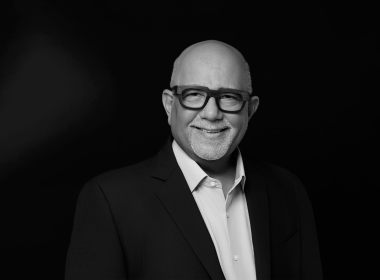
Steve Waddell, an AgeTech executive whose career spans aerospace, defense, and longevity, has spent the last decade building from a different premise. Emergencies do not come out of nowhere. They are preceded by measurable behavioral signals, and if those signals can be captured early enough, the crisis can often be prevented entirely. “When care only starts after something bad happens,” Waddell says, “we’ve already failed the individual and the system.”
Behavior Is the Earliest Biomarker Available
Longevity science has established a principle that elder care technology has been slow to operationalize: just as blood pressure predicts cardiovascular risk, behavior predicts functional decline. Changes in daily activity – what Waddell calls activities of daily living (ADL) drift – are among the earliest indicators of fall risk, cognitive change, or an approaching loss of independence. These changes often appear as subtle shifts: a slower gait, disrupted routines, or hesitation where confidence once existed.
These signals appear days or weeks before a clinical event. Episodic care models built around appointments and periodic check-ins cannot track behavioral continuity at the resolution required to catch meaningful deviation early. The data exists in how people move through their homes every day. The architecture to capture it continuously, passively, and accurately has not existed at scale until recently.
No Cameras. No Wearables. No Compliance Burden.
Most remote monitoring technology asks older adults to change their behavior in order to be monitored, wear a device, press a button, or follow a protocol. Each requirement adds friction, reduces adoption, and introduces the compliance failures that make the data unreliable precisely when it matters most.
Waddell’s approach inverts that model entirely. Using radar-based sensing and environmental signals, the home itself becomes a continuous source of behavioral intelligence. No cameras. No wearables. No checklists. Movement patterns, daily routines, navigation through familiar spaces, all of it captured passively and processed for meaningful deviation before a threshold is crossed rather than after it has been breached.
“Ambient systems quietly observe patterns, not people,” Waddell says. The distinction carries significant weight for adoption, for regulatory positioning, and for the integrity of the data itself. Behavior observed in a natural environment without compliance requirements is more continuous and more accurate than behavior captured through devices that people forget, avoid, or modify because they know they are being watched.
The Outcome That Matters at Scale
Predictive fall prevention is one expression of a larger shift Waddell is building toward: a move from episodic snapshots to continuous behavioral insight, from reactive reimbursement to value-based care models that reward outcomes over interventions. As populations age globally, independence becomes the most consequential health outcome the system can protect. Every hospitalization avoided, every transition to institutional care delayed, these are not just quality-of-life outcomes. They represent measurable reductions in healthcare costs, caregiver burden, and system strain that compound significantly at the population scale.
“AgeTech is not about monitoring decline,” Waddell says. “It is about supporting autonomy for as long as possible.” The organizations that understand that distinction and build toward it now will define what value-based care for aging populations actually looks like. The ones that keep designing systems that wait for failure will keep arriving after the opportunity to prevent it has already passed.
Follow Steve Waddell on LinkedIn for more insights on AgeTech, predictive monitoring, and the future of aging in place.