



Every enterprise knows the sequence. Something breaks in the enterprise resource planning (ERP) system. A ticket gets filed. It sits in a queue, gets misrouted, and three days later someone calls back. By then, payroll has been delayed, workflows have collapsed, and the business has absorbed costs that never appear on any report.
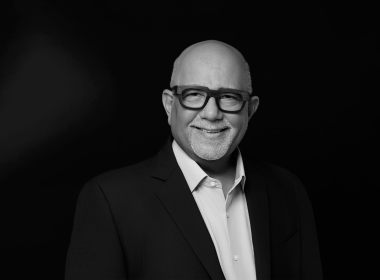
Herbert Roy George, senior director of Labor, Workforce, Human Capital Management (HCM), and Talent Systems at DoingERP.com and founder of KairosFS, has spent over two decades leading Oracle Cloud HCM and ERP transformations globally, including engagements with IBM, KPMG, and Oracle directly. His verdict on traditional ERP support is unambiguous. “That is not a support model,” George says. “That is a bottleneck. And it is costing your business more than you realize.”
A System Built for Simple Problems in a Complex Environment
The structural failure of traditional ERP support is not a resourcing problem. It is a design problem. ERP environments are deeply interconnected: payroll, supply chain, and human resource information system (HRIS) do not operate in silos, and issues in one area can ripple through the entire stack. Traditional support ignores that complexity entirely, treating every incoming issue as a simple help desk request regardless of its actual nature.
Tickets get misclassified. They land in the wrong department. Hours are spent determining ownership before anyone begins solving the actual problem. AI agents eliminate that failure chain. They understand technical context immediately, diagnose the issue, and either resolve it or route it to the right expert in real time. “No more guessing, no more waiting,” George says. For enterprises running mission-critical operations on ERP infrastructure, that is not an incremental improvement. It is a fundamental redesign of how support works.
Speed to Expert Is a Revenue Variable
Every hour an ERP issue goes unresolved has a direct operational cost. Delayed payroll runs. Blocked workflows. Cascading failures across interconnected systems multiply the original problem, while the ticket sits untouched in a queue. The enterprises that treat ERP support speed as a competitive variable are the ones building structural advantages over those that accept the old model as inevitable.
KairosFS’s agent Lisa reduces the time to expert by up to 90%. Available around the clock through a voice interface, Lisa understands complex Oracle Cloud HCM and ERP problems and connects teams to the right consultant the moment human expertise is required. “That kind of speed used to require a full support department,” George says. “Now it runs on an AI agent.” The cost of that capability has collapsed. The competitive advantage it creates has not.
Orchestration Is What Separates Agents From Chatbots
The distinction most enterprises miss when evaluating AI for support functions is the difference between a system that responds and one that acts. A chatbot answers questions. An AI agent resolves situations. Lisa screens candidates, schedules interviews, syncs calendars, and coordinates expert availability in real time. She operates as an active layer across the ERP stack, eliminating manual triage entirely and initiating the downstream steps that resolution requires without waiting for human instruction at each stage. “AI agents are not mere chatbots,” George says. “They orchestrate.” That capability transforms support from a reactive cost center into an operational asset that compounds in value as the complexity of the environment grows.
The Window for Competitive Advantage Is Closing
The enterprises winning on ERP operations right now are not the ones with the largest support teams. They are the ones that have already made the transition from ticket queues to intelligent, real-time resolution. That transition is not theoretical. It is live, running in production environments today. “If your organization is still relying on email chains and support queues to manage ERP issues, you are already behind,” George says.
The cost of delay is not static. Every quarter spent on the old model is a quarter competitors are compounding the operational advantage that AI-driven support creates. “The future of ERP support is not a ticket,” George says. “It is a conversation.” The only question is how long organizations wait before they join it.
Follow Herbert Roy George on LinkedIn or visit his website for more insights on AI agents, Oracle Cloud HCM, and enterprise ERP transformation. Learn more about DoingERP.com here.