

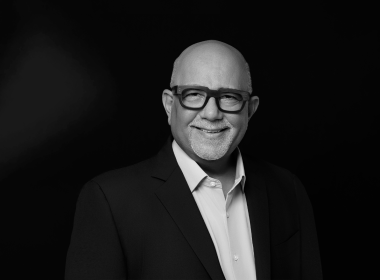


Corporate strategy has never been cheaper to produce or harder to cash in. Boards commission it, consultancies package it, and executives present it with conviction, yet the gap between the deck and the quarter remains the most expensive unresolved problem in most organizations. Elaine Joggerst, who has spent more than 20 years building strategy and operational roadmaps across companies, including Google, Citrix, and PC Connection, puts the diagnosis bluntly: “Strategy is the easy part and every company has a deck full of bold plans. The hard part is turning those plans into execution that delivers results.” That sentence should unsettle any leadership team that measures its planning cycle in slides, rather than in shipped outcomes. The work of strategy does not end when the plan is approved. By Joggerst’s account, that is roughly where it begins.
Alignment Is The Precondition, Not The Afterthought
Most execution failures get written up as discipline problems. People missed deadlines, teams dropped handoffs, somebody did not follow through. Joggerst points to a less comfortable explanation: the plan was never shared in the first place. “Sales, marketing, operations, and every other function have their own priorities, goals, and deadlines,” she says. Each of those functions can be performing well against its own scorecard while the enterprise strategy quietly stalls, because nobody owns the space between departments. That space is where strategy either becomes real or dies quietly.
Her approach treats alignment as structural work rather than a communications exercise. “I bring the right people together and find where priorities can be synergistic, work through competing demands, and build a plan everyone can get behind and execute.” Two phrases in that sentence carry weight. “Work through competing demands” acknowledges that the conflicts are real, not misunderstandings to be smoothed over with a kickoff meeting. And “get behind and execute” sets a higher bar than consent. A function that agrees to a plan in a room and then returns to its own roadmap has not aligned; it has merely declined to object. Joggerst’s point is that leaders who skip this step are not saving time. They are deferring a cost that compounds, and they typically pay it mid-quarter, when the dependencies surface and nobody has authority to resolve them.
Ownership, Deadlines, And Measurable Outcomes
The second failure mode is subtler and far more common among capable teams. A strategy is approved, everyone agrees it matters, and then it sits there, too large to act on. “Big plans don’t deliver results on their own,” Joggerst says. The gap is not motivation. It is granularity. A strategic objective written at the altitude of a board presentation cannot be assigned, scheduled, or measured, which means it cannot be executed, no matter how committed the organization is.
Joggerst’s remedy is specific about what a usable plan contains. “I break the strategy into clear, manageable actions with defined ownership, meaningful deadlines, and measurable outcomes. Everyone knows what they own, how it connects to the bigger picture, and what happens next.” The word “meaningful” attached to deadlines carries the real weight. Arbitrary dates imposed from above train teams to negotiate rather than deliver, and once that habit sets in, the whole plan becomes advisory. So does the connective requirement that people understand how their piece links to the larger objective. Decomposition without that context produces busy teams executing disconnected tasks, which is how organizations end up hitting every milestone and still missing the goal. Ownership, in this framing, is not a name in a project tracker. It is a person who can explain why their deliverable matters to the outcome and what moves once they finish it.
Learning Is Part Of The Plan, Not A Correction To It
The third element is the one most organizations handle worst, because it collides with how plans are sold internally. Commitment to a strategy is often treated as a virtue in itself, and changing course reads as an admission that the original thinking was flawed. Joggerst rejects the premise. “New products, business lines, and growth strategies rarely get everything right on the first try,” she says. That is a statement about the nature of new ventures, not about the quality of planning. If it is true, then any plan that cannot absorb evidence is structurally fragile from the day it is signed off.
What follows is a working method rather than a slogan. “I look at what’s working, what isn’t, and what needs to change. Then I refine the approach and keep moving.” The sequencing matters. Assess, refine, continue, with no pause for reorganization or blame. And her framing of the objective should be pinned above every operating review: “The goal isn’t to follow a plan blindly, it’s to find the path that delivers results.” Following the plan is not the same as achieving results, and treating them as interchangeable is how companies defend doomed initiatives for three quarters longer than the data warranted. The leaders who do this well build the review cadence into the roadmap itself, so that adaptation is a scheduled behavior rather than an emergency one.
Underneath all three practices sits a single claim that deserves more attention from executive teams than it usually gets: “A great plan is only as good as the alignment, ownership, and execution behind it.” Strategy, by this reading, is not an artifact a company possesses. It is a capability a company either demonstrates or does not, visible only in what ships. Joggerst describes her own motivation in terms that are refreshingly operational rather than theoretical. “I love taking an idea, finding the opportunity, and building the strategy, getting all the right people on board, and making something fantastic happen.” The deck is the beginning. Everything that determines whether it was worth writing happens afterward.
Follow Elaine Joggerst on LinkedIn for more insights on strategy development, go-to-market planning, and operational execution.