
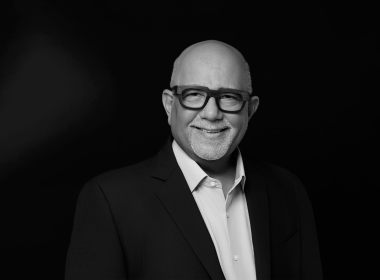



Every major technology shift of the past four decades has been accompanied by the same anxiety that this one will make human judgment obsolete. It never has. David Riordan Wood, CEO and board member of Interactive Health, the parent company of Human Touch and Relax the Back, has repeatedly watched technology reshape the retail and consumer wellness industries over a 40-year career. His read on AI is shaped by that history, and it runs counter to the anxiety driving most boardroom conversations about the technology right now. “AI isn’t here to replace leadership,” Wood says. “If anything, it makes leadership more important.”
Using AI as a Strategic Sounding Board, Not a Decision Maker
The most valuable application of AI for executive decision-making is not automation. It is interrogation. Large language models are remarkably effective at challenging assumptions, surfacing perspectives that have not been considered, and pressure-testing the logic behind a position before it becomes a commitment. The key, in Wood’s experience, is treating the interaction as a genuine dialogue rather than a search query.
The process he describes is iterative by design. Ask a question, refine the framing based on the response, push back on the output, and repeat. After several rounds, the thinking sharpens in ways that a single prompt cannot produce. What AI cannot do is carry the responsibility that follows the decision. “AI can help shape the thinking,” Wood says, “but the responsibility for the decision always remains human.” Leaders who understand that distinction use AI to arrive at better decisions faster. Leaders who blur it are outsourcing something that was never theirs to delegate.
Applying AI to Real Operational Problems
The gap between exploring AI in theory and deploying it to solve real business problems is where most executive adoption stalls. Wood has closed that gap deliberately. Working on a project to rethink how Interactive Health manages product warranties across its brands, his team is using AI tools to review existing policies, benchmark industry best practices, and analyze warranty claim data to identify patterns in defective product returns.
The goal is not insight for its own sake. It is better decisions around policy design, product quality, and long-term cost control; measurable outcomes tied directly to business performance. That specificity matters because AI applied to a vague objective produces vague outputs. AI applied to a defined problem with clear success criteria, on the other hand, produces something an organization can actually act on. Wood’s approach treats AI with a clear mandate, a defined scope, and accountability for results.
Why AI Adoption Is a Personal Journey, Not a Deployment
The final principle Wood offers is the one most organizational AI strategies overlook entirely. Every leader approaches these tools differently. Some move quickly, comfortable with experimentation and tolerant of early failures. Others are more deliberate, preferring to observe before committing. Neither approach is wrong. What matters is that the learning actually happens and is shared. “The best learning happens through experimentation,” Wood says. “Trying things, sharing what works with colleagues, adjusting your approach.” Over time, a rhythm develops that is specific to how a particular leader thinks and works. That rhythm is when AI begins to meaningfully improve performance rather than simply adding another tool to the inventory.
Organizations that treat AI adoption as a technology decision made at the top and pushed down miss the personal dimension that determines whether it actually changes how decisions get made. The leaders who will define what AI-augmented leadership looks like are not the ones who resist the technology or defer to it. They are the ones who engage with it deliberately, maintain the judgment it cannot replicate, and use it to make better decisions for the people and organizations depending on them. “The opportunity for leaders isn’t to compete with AI,” Wood says. “It’s to use it thoughtfully.”
Follow David Riordan Wood on LinkedIn for more insights on executive leadership, AI integration, and building organizations designed to endure.