



Most executives feel the same tension right now of moving fast on AI or risk falling behind, but move carelessly and risk trust, compliance, and reputation.
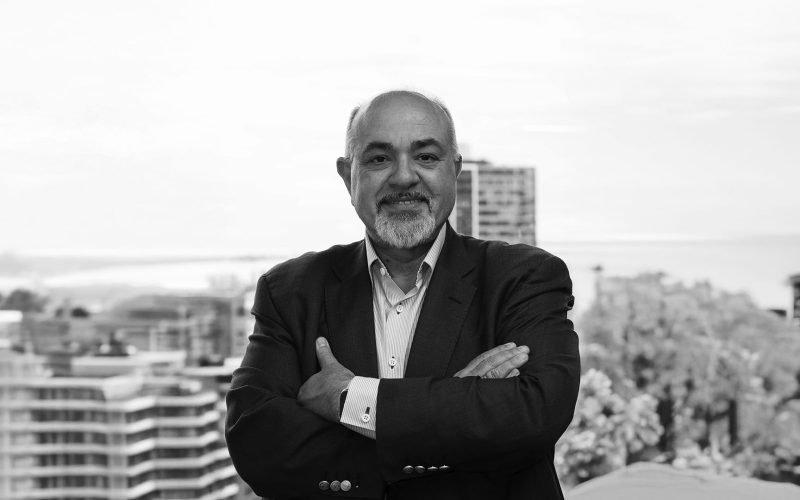
Christopher Bannocks has spent more than 25 years operating inside that tension. From global financial services to FMCG and insurance, including senior leadership roles at ING and QBE, he has led AI and data transformations where speed mattered and so did trust. His perspective is shaped by an unlikely teacher: aviation.
Recently, Bannocks installed a new autopilot system in his aircraft. “The mental load reduction on long flights is incredible,” he says. “You can monitor, manage, and let the system do the heavy lifting.” But the insight isn’t about automation, it’s about responsibility. Even the most advanced autopilot still requires a human in the cockpit.
That, Bannocks argues, is the blueprint for scaling AI safely in business.
AI Should Reduce Load, Not Abdicate Responsibility
The promise of AI is not autonomy for its own sake. It is leverage. Done well, AI frees teams from repetitive cognitive work so they can focus on judgment, oversight, and decision-making.
“AI should feel like an autopilot, not an unmanned aircraft,” Bannocks explains. “You don’t remove the pilot. You change what the pilot spends their attention on.”
Many AI initiatives fail not due to technical shortcomings, but because accountability becomes blurry. When systems operate as black boxes, trust erodes, both internally and externally.
Bannocks’ core belief is simple. AI must remain visible, explainable, and interruptible by humans at all times.
Lead With Values, Not Just Use Cases
Most AI programs begin with a list of opportunities: automation, cost reduction, personalization, growth. Bannocks starts somewhere else.
“If AI erodes trust, it doesn’t matter how much growth it creates, it’s not sustainable,” he says.
At QBE, ethical principles were embedded into the AI playbook from day one. Models were designed to be explainable, fair, and aligned to both customer outcomes and employee expectations. This shaped what was built, how it was governed, and what was deliberately not pursued.
The payoff was tangible. Responsible design enabled real scale without regulatory backlash or internal resistance. The program earned industry recognition not because it moved slowly, but because it moved deliberately.
Bannocks is blunt about the trade-off many leaders assume exists. “Responsible AI isn’t a brake,” he says. “It’s the runway.”
Build Governance Into the DNA, Not on Top of It
Good intentions do not survive contact with scale unless they are operationalized. For Bannocks, governance is not a review committee that appears after deployment. It is the system that allows teams to move faster with confidence.
At QBE, oversight, risk controls, and accountability were designed into delivery from the start. Clear ownership was defined. Escalation paths were explicit. Model risk, data lineage, and decision rights were treated as first-class design inputs.
“Governance isn’t red tape,” Bannocks says. “It’s the rules of the road. Without them, everyone slows down because no one knows where the edges are.”
Speed and Safety Are Not Opposites
The idea that ethics slow innovation is one of the most expensive myths in AI adoption. Bannocks’ experience shows the opposite.
One generative AI solution was taken live in just 12 weeks, with governance and ethical controls embedded from the outset. The result was a 58% uplift in quote conversion. Speed was achieved not by cutting corners, but by removing uncertainty.
“When values and governance are baked in early, they stop being friction,” Bannocks explains. “They become accelerators.”
This is the autopilot effect at organizational scale, reduced cognitive load, clearer oversight, and faster execution without sacrificing control.
Trust Is the Real Scaling Constraint
Bannocks rejects the idea that AI must be opaque to be powerful.
“AI shouldn’t be a black box,” he says. “It should be a glass box, visible, accountable, and ready to scale.”
Just like in aviation, the future belongs to organizations that know exactly when to let the system fly and when a human needs to keep their hands on the controls.
Follow Christopher Bannocks on LinkedIn for more insights.