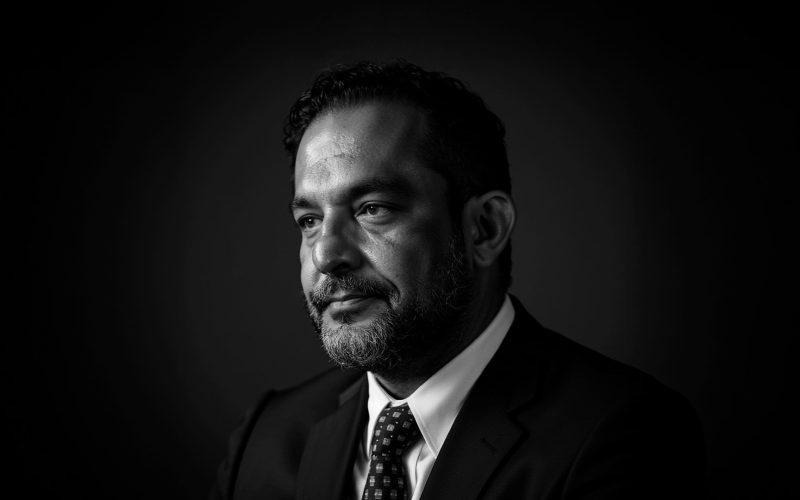




For Alan David Rudolph, driving operational transformation across global SaaS and cloud organizations depends on three interconnected pillars: a unified operating framework, a strong cultural and communication foundation, and scalable systems that make high performance repeatable. By aligning teams around shared goals, maintaining transparent communication across borders, and implementing systems that support consistent execution, organizations can create the conditions for sustainable, scalable growth.
“Growth isn’t just about numbers. It’s about aligning people, process, technology, data and purpose to create sustainable, customer-driven results,” says Rudolph, who’s led teams of more than 1,000 professionals, influenced revenue trajectories from $15M to $50B, and helped organizations achieve double and triple digit growth.
His approach is rooted in a belief that sustainable performance is achieved through people-first systems, operational clarity, and relentless execution. The following principles, drawn from Rudolph’s leadership career, reveal how global SaaS and cloud companies can build transformation that lasts.
Leading cross-border teams requires more than ambitious goals; it demands a unified operating model that turns strategy into daily discipline. “Transformation across borders starts with clarity,” he says. “You need a unified operating model that’s adaptable to local nuances, but anchored in consistent goals, key performance indicators, and decision rights.”
In one enterprise SaaS organization, he helped implement a single operational blueprint spanning multiple regions. It unified performance metrics, customer success priorities, and accountability loops so teams could act independently without becoming disconnected. The impact was immediate: autonomy expanded, alignment strengthened, and execution cadence became predictable at scale.
This balance of consistency and flexibility is essential. A shared framework, he says, “empowers local execution while preserving global cohesion.”
Building Cultural Infrastructure That Connects Teams Across Borders
Even the strongest operating model collapses without trust and communication, which is why communication must be the backbone of transformation. This is particularly true in organizations stretched across time zones and cultures. “Great operations fail without great communication,” he says. “Transformation only sticks when people feel heard, feel connected, and are aligned to the mission.”
To achieve this, he advocates for structured communication rhythms that create transparency and belonging. Regional all-hands, executive AMAs, cross-functional stand-ups, and consistent messaging anchored in purpose have been pivotal in his global roles.
What matters most is not how often leaders communicate, but how reliably they do it. “The real pillar lies not in the consistency of the communication, but its transparency and clarity.” When people understand decisions, see their contribution to the broader mission, and trust leadership’s intent, transformation accelerates.
Scaling Systems That Make Excellence Repeatable
Rudolph has championed scalable technology platforms, AI-driven support optimizations, unified customer success systems, and modern enablement programs throughout his career. “Transformation must be operationalized,” he says. “That means investing in the right tools, data systems, and enablement programs that make excellence repeatable.”
His track record offers proof. He stabilized a professional services business by shifting it from negative margins to over 20% gross margins. He led the deployment of AI-enabled support systems that reduced response and resolution times and integrated global customer learning platforms that enhanced onboarding and training. And during acquisition integrations, such as the PushTech platform, he ensured operational consistency while unlocking new market capabilities.
Scalable systems do far more than drive efficiency. “They empower your people to win consistently,” he says, a philosophy reflected across the global teams he has led.
Leading With Purpose, Curiosity, and Discipline
Underpinning his insights and experiences is a strong belief that transformation is a people-driven journey. Whether revitalizing a customer success organization, guiding an early stage company toward scalable operations, or supporting a billion dollar exit, Rudolph emphasizes the importance of leading with clarity and intention. “Successful transformation is never just about technology. It’s about people. It’s about process. It’s about purpose,” he explains.
When leaders create transparency, invite curiosity, and maintain discipline, teams rise to meet extraordinary challenges. “It’s a continuous capability.” And when built correctly, it unlocks lasting growth.
To learn more or connect with Alan David Rudolph, visit his LinkedIn or website.